
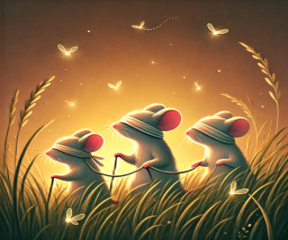
 Three blind mice, three blind mice,
See how they run, see how they run!
They all ran after the farmer’s wife,
Who cut off their tails with a carving knife.
Did you ever see such a sight in your life,
As three blind mice?
This seemingly grim rhyme invites us to reflect on the challenges of navigating life without clarity—blind to what lies ahead or uncertain about which way to turn. The three mice, stumbling and running in unison, could be seen as symbols of our own inner confusion when intuition is clouded by fear, external noise, or self-doubt.
But what if this story isn’t just about blindness? What if it’s about finding a way to trust your inner compass, even when external clarity is lacking? The farmer’s wife becomes a metaphor for life’s sharp edges, the unexpected circumstances that push us to stop running blindly and instead pause, recalibrate, and tune into our deeper knowing.
To trust our intuition is to listen to the quiet voice within that says, “Stop running. Turn inward. Begin again.” It’s about recognizing when to step back from the chaos, find stillness, and hear what our heart or gut has to say—no matter how uncertain the path ahead may seem.
Three Blind Mice first appeared in 1609 in a collection by Thomas Ravenscroft. Some link it to Queen Mary I and her persecution of Protestant reformers, with the “blind mice” symbolizing opposing nobles. Over time, its darker origins faded, becoming a playful children’s rhyme celebrating curiosity and resilience.