
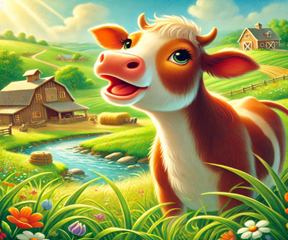
Old MacDonald had a farm,
E-I-E-I-O.
And on that farm, he had a cow,
E-I-E-I-O.
With a moo moo here,And a moo moo there,
Here a moo, there a moo,
Everywhere a moo moo,
Old MacDonald had a farm,
E-I-E-I-O.
The cow, with its steady presence on Old MacDonald’s Farm, embodies nurturing and sustenance. For generations, cows have been symbols of provision, offering milk, nourishment, and a calming presence in rural life. In the context of this rhyme, the cow reflects the stability and care we can provide for ourselves and others, even in challenging times.
The repetitive “moo moo here, moo moo there” emphasizes the constancy of the cow’s contribution, reminding us of the value of showing up in small but consistent ways. In life, it’s often the simplest acts of care and connection—like the cow’s steady giving—that sustain us and those around us.
This rhyme also speaks to the harmony of interconnection. The cow’s role is not isolated but part of a larger ecosystem, where its presence contributes to the rhythm of the farm. It invites us to reflect on our roles in the communities we inhabit and how our own constancy, care, and resilience can ripple outward to nurture others. In the familiar refrain of “E-I-E-I-O,” we find a comforting rhythm, reminding us of the grounding power of routine and the joy of shared moments, whether singing this rhyme with others or reflecting on its deeper meaning.
The origins of “Old MacDonald Had a Farm” trace back to traditional folk music, with variations appearing as early as the 18th century in Scotland and England. The song gained popularity in the United States in the early 20th century, evolving into the version we know today. Its enduring appeal lies in its playful rhythm, repetition, and ability to engage listeners of all ages, often serving as a tool for teaching children about animals and fostering a sense of joy and connection through communal singing.