
When we hear the word accessibility, it’s easy to think about things designed specifically for people with disabilities: ramps, designated parking spaces, Braille signs, wheelchair lifts.
What we don’t always notice is how often an accommodation created to give one group better access becomes an ordinary part of life for the rest of us. There’s even a name for this: the curb-cut effect.
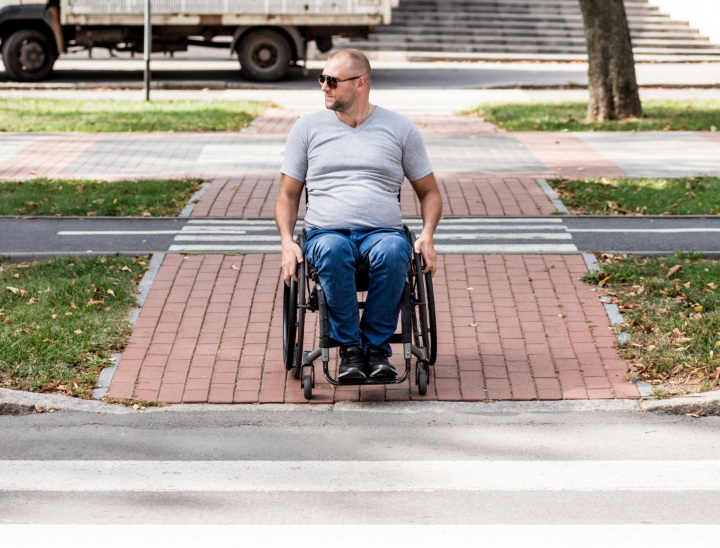
So, what does the curb-cut effect look like in everyday life? Here are some examples:
- Audiobooks
Audiobooks make books accessible to people who are blind or have low vision, people with dyslexia and other reading disabilities, and people with physical disabilities that make holding or using a conventional book difficult. The Library of Congress established its national library program for blind readers in 1931, with talking books following in the 1930s.Audiobooks have also become a mainstream way to read. People listen while exercising, commuting, doing housework, relaxing or simply because they prefer hearing a book to reading one on a page. - Captions
Captions are essential for people who are Deaf or hard of hearing, but plenty of hearing people keep them turned on.They help us follow dialogue in a noisy room, watch television without disturbing someone else, understand an unfamiliar accent, or decipher a scene where the background music seems determined to drown out whatever the actors are saying. - Online Shopping
For someone who can’t drive, leave home easily, or navigate stores, online shopping can provide independence and access to everything from groceries and clothing to household necessities and medical supplies.It’s also useful for caregivers who can’t easily leave someone alone, parents with small children, people recovering from illness or injury, people without reliable transportation, and anyone who would rather have the things they need come to them. - Remote Work
Working from home has long been an important accommodation for some people with disabilities, removing barriers created by commuting or the physical workplace. The Equal Employment Opportunity Commission recognizes telework as a possible reasonable accommodation under the Americans with Disabilities Act.That same flexibility can help caregivers, parents, people recovering from illness or injury, and anyone whose work doesn’t actually require being in an office. - Telehealth
Getting to a medical appointment can involve transportation, mobility challenges, time away from work, arranging childcare or finding someone to stay with a person in our care.Telehealth can’t replace every in-person visit, but when a physical examination or procedure isn’t necessary, it can remove many of those barriers. What makes medical care accessible to someone who has difficulty leaving home can also save the rest of us a drive, a waiting room, and a significant chunk of the day. It’s also priceless when we or someone in our care is ill in the middle of the night and just needs someone to prescribe an antibiotic. - Absentee Voting
Although there were earlier examples, widespread absentee voting in the United States developed during the Civil War, when states needed ways for soldiers serving away from home to cast their ballots. Federal protections later developed for military members, eligible family members, and U.S. citizens living overseas.Today, every state has some form of absentee voting, although the rules governing who can use it and how it works vary considerably.What began as a way to let people participate when they couldn’t physically get to their polling place created another way to exercise the right to vote. - Curb Cuts
Finally, we come to the thing that gave the curb-cut effect its name: actual curb cuts.Disability activists fought for them because an ordinary curb can be an impassable barrier for someone using a wheelchair. Today, curb cuts also make sidewalks easier to navigate with strollers, walkers, bicycles, shopping carts, rolling luggage, and delivery equipment.The curb cut is still an accessibility feature. It just happens to be useful to almost everyone. - Bonus: Comic Sans
You know that font everyone loves to hate? Comic Sans may be easier for some people with dyslexia to read because its letters are highly differentiated from one another. It isn’t a universal solution, and there’s no single font that’s best for everyone with dyslexia, but readability is one reason Comic Sans has persisted in accessibility conversations.Plenty of people simply find it friendly, informal, and easy to read—even if it’s only in actual comic books.
As this list shows, accessibility doesn’t just remove barriers; it creates more ways for all of us to participate in everyday life. What feels like a convenience today may become something we depend on tomorrow.
Improv Invitation: Think of some other “curb-cut style” accommodations that have become beneficial to everyone. How many can you come up with that we haven’t included here?