
As many people mark Hanukkah this season, it is worth remembering how varied the experience of this holiday can be. Outside the United States, the Festival of Lights is often a quieter, more modest observance. In the U.S., it has been shaped by the cultural weight and commercialization of Christmas, sometimes magnified, sometimes overshadowed, often reframed by the season that surrounds it. Even so, the heart of Hanukkah remains unchanged: light held against darkness, presence chosen over despair. 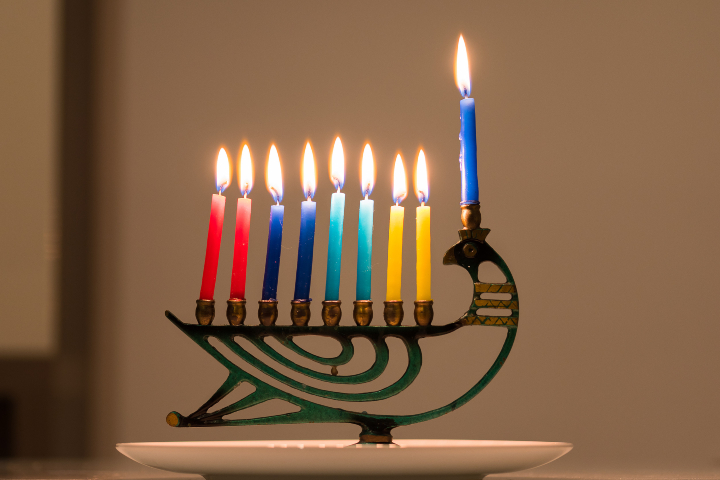
That impulse is universal. Across cultures and traditions, people light candles in winter. We do it because the days are short. We do it because darkness can feel relentless. We do it because small flames remind us that warmth, connection, and hope still exist, even when the world feels heavy.
The Hanukkah menorah offers something additional to that universal symbolism. It does not hold only the eight candles associated with the miracle remembered across eight nights. It holds a ninth candle as well: the shamash, often called the helper candle. The shamash stands apart, not to draw attention to itself, but because its role is different. It is the candle that lights all the others.
That detail matters.
Caregivers and helpers often move through their days feeling unseen or alone. Their work is steady, repetitive, and emotionally demanding. They bring light to others through presence, patience, advocacy, listening, and care. Like the shamash, their purpose is not self-display but illumination. Their light exists so someone else’s light can catch.
What the menorah quietly reminds us of is that the helper candle is never alone. It is part of a structure. It belongs to a larger whole. Its light is shared, reflected, and multiplied. In supporting others, helpers remain connected to something larger than themselves. Help does not move in only one direction. Caregiving is reciprocal, even when it does not feel that way in the moment.
As this season unfolds, many people are holding others through grief, illness, exhaustion, uncertainty, or transition. Some are doing so while celebrating Hanukkah. Others are preparing for Christmas or honoring Kwanzaa. Many are navigating all of it at once.
May this season bring moments of rest for those who give so much.
May helpers remember that they are seen, valued, and supported.
We wish you a happy Hanukkah, a merry Christmas, a good Yule, a joyful Kwanzaa, or if none of those apply, just a safe and peaceful December.
May light be shared, help be close, and no one feel alone in the work of caring.
This is such a beautiful piece-and a ray of hope for me during this season. Thank you for your inspiring post Melissa.